A pressure washer is the most misused tool in Britain's garages. Used right, it brings a drive back to the day it was laid. Used wrong, maximum power, narrow nozzle, held close, it etches the block faces, fades the colour, and blasts out the sand that holds the whole drive together. The damage is permanent, and it's the single most common mistake we see on driveways we're called to rescue.
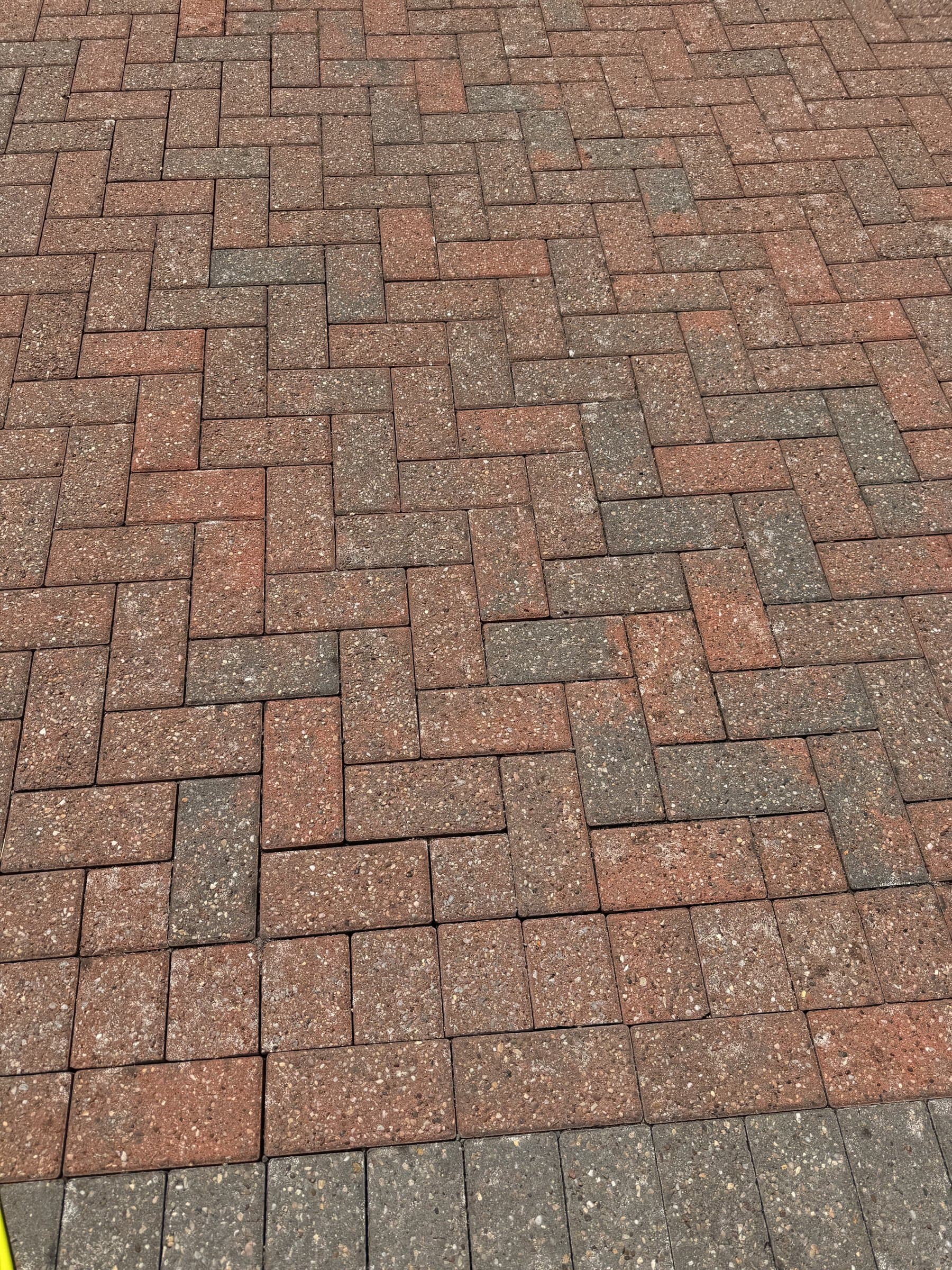
How a driveway clean is done properly
Identify the surface first
Block paving, concrete, tarmac and natural stone tolerate completely different treatment. Tarmac shouldn't be jetted at all, the pressure strips the bitumen binder. Natural stone pits and etches under high pressure. What's safe on concrete wrecks sandstone. The surface decides the method, not the machine.
Prepare the area
Cars, pots and loose gravel come off the drive, under a pressure jet, grit becomes a projectile that chips paint and glass. Weeds come out with the root, and loose or rocking blocks get spotted before washing makes them worse.
Pre-treat the stains
Oil and fuel stains are hydrophobic, water alone won't shift them. We work a specialist degreaser into the stain and let it dwell before washing. Dwell time is the step DIY jobs always skip: the chemistry needs time to work.
Wash with a rotary surface cleaner, not a bare lance
We use a rotary surface-cleaner head rather than a direct lance. It spreads the pressure evenly across the surface, which is what avoids the streaks, tide marks and etching a hand-swept lance leaves. Pressure gets adjusted down for softer surfaces like sandstone.
Re-sand the joints once bone dry, if your drive needs it
The kiln-dried sand in block-paving joints is structural, it locks the blocks in place, and washing strips some of it out. Once the surface is completely dry, fresh sand swept into the joints puts that right; leave joints empty and blocks shift, weeds move in, and rain erodes the bedding underneath. Re-sanding is something we do when you ask for it, tell us when you book and we'll price it in, and if your joints genuinely need it, we'll say so.
Seal it, only if it's right for the drive
Sealing is optional, not automatic. Done right, on clean, dry, freshly sanded paving, it locks the sand in and slows the regrowth. Done onto damp or dirty paving it traps moisture and fails as a cloudy film. It's a judgement call, and we'll give you an honest one.
Those black spots that won't wash off
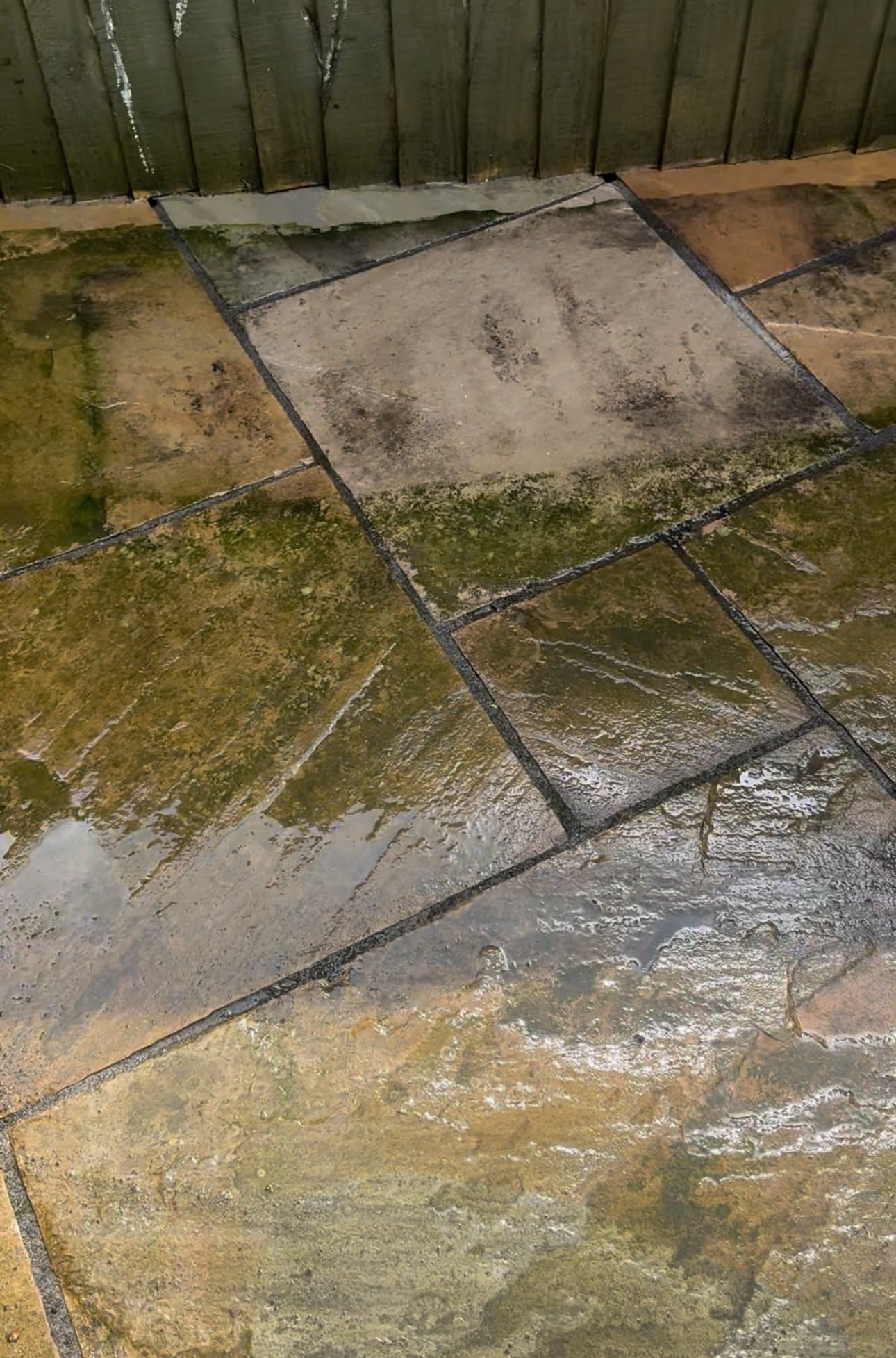
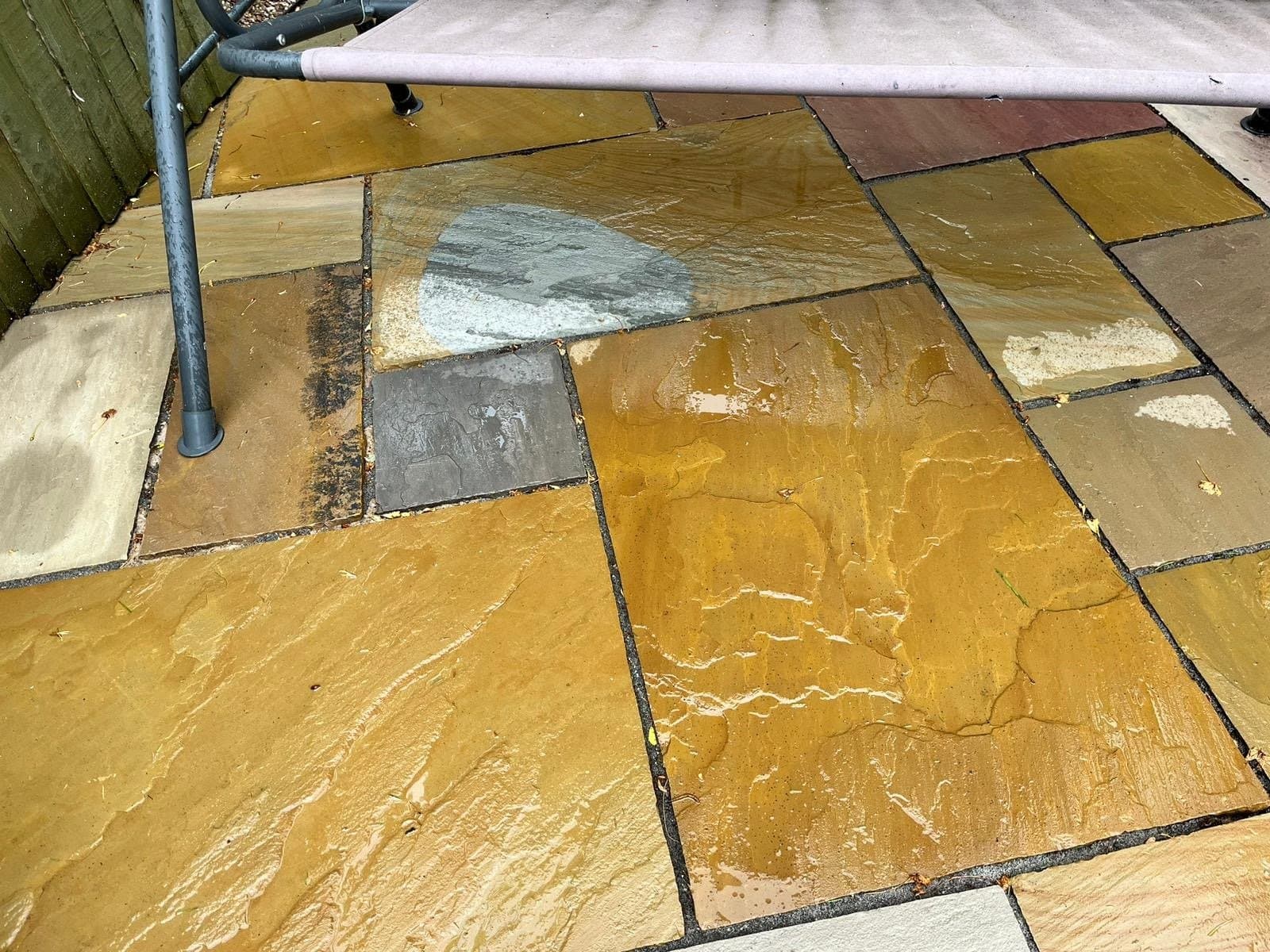
The stubborn black dots on patios, usually Indian sandstone, aren't dirt. They're black spot lichen, and its root structures grow into the pores of the stone. Pressure washing takes the visible top off and opens the pores up for regrowth; bleach and vinegar just lighten the surface while the organism survives underneath. Proper removal is a specialist treatment left to dwell for hours, then a gentle low-pressure rinse, it's a different job from a normal clean, which is why we offer a free test patch first, so you can see the result on a small section before committing to anything.
What you can honestly do yourself
Start with a stiff broom
Warm soapy water and a stiff brush is the manufacturer-recommended starting point and safe on virtually every surface. Moss brushes off dry surfaces surprisingly well, the RHS confirms brushing works without any chemicals at all.
Deal with oil immediately
Fresh spill? Blot it with cat litter or paper towel straight away, then warm soapy water worked in with a stiff brush. The longer it sits, the deeper it goes.
Change the conditions
Moss and algae come back wherever it stays damp and shaded. Sweep regularly, keep drains clear, cut back overhanging plants and fix standing-water spots, prevention is free and it works.
If you do jet it yourself
Test a hidden corner first, start on the lowest setting, keep the lance at an angle and well off the surface, and sweep, never hover. Goggles on, and keep the cable and connections out of the water. Then re-sand the joints once dry: it's not optional.
When to stop
Tarmac, natural stone you're not sure about, black spot lichen, and anything already flaking or rocking, stop, because the damage from getting it wrong is permanent. And two absolute rules with any pressure washer: never point it at skin, people or pets, a high-pressure jet drives water deep under the skin and it's a hospital job, and never use one from a ladder or steps.
What it costs and how often
Typical UK prices for a driveway clean run roughly £100–£350 depending on size and condition, with sealing on top if you want it. Once a year is plenty, ideally spring, after the winter grit, and more than twice a year starts causing wear rather than preventing it. On an untreated surface the growth typically starts returning within 12–18 months in the UK climate; sealing slows that down considerably.
Every driveway and patio job we do includes a full window clean at no extra cost, jet washing splashes the glass, it's unavoidable, so we just deal with it. Send a photo of your drive on WhatsApp for an exact price, or read more about how we clean driveways and patios.