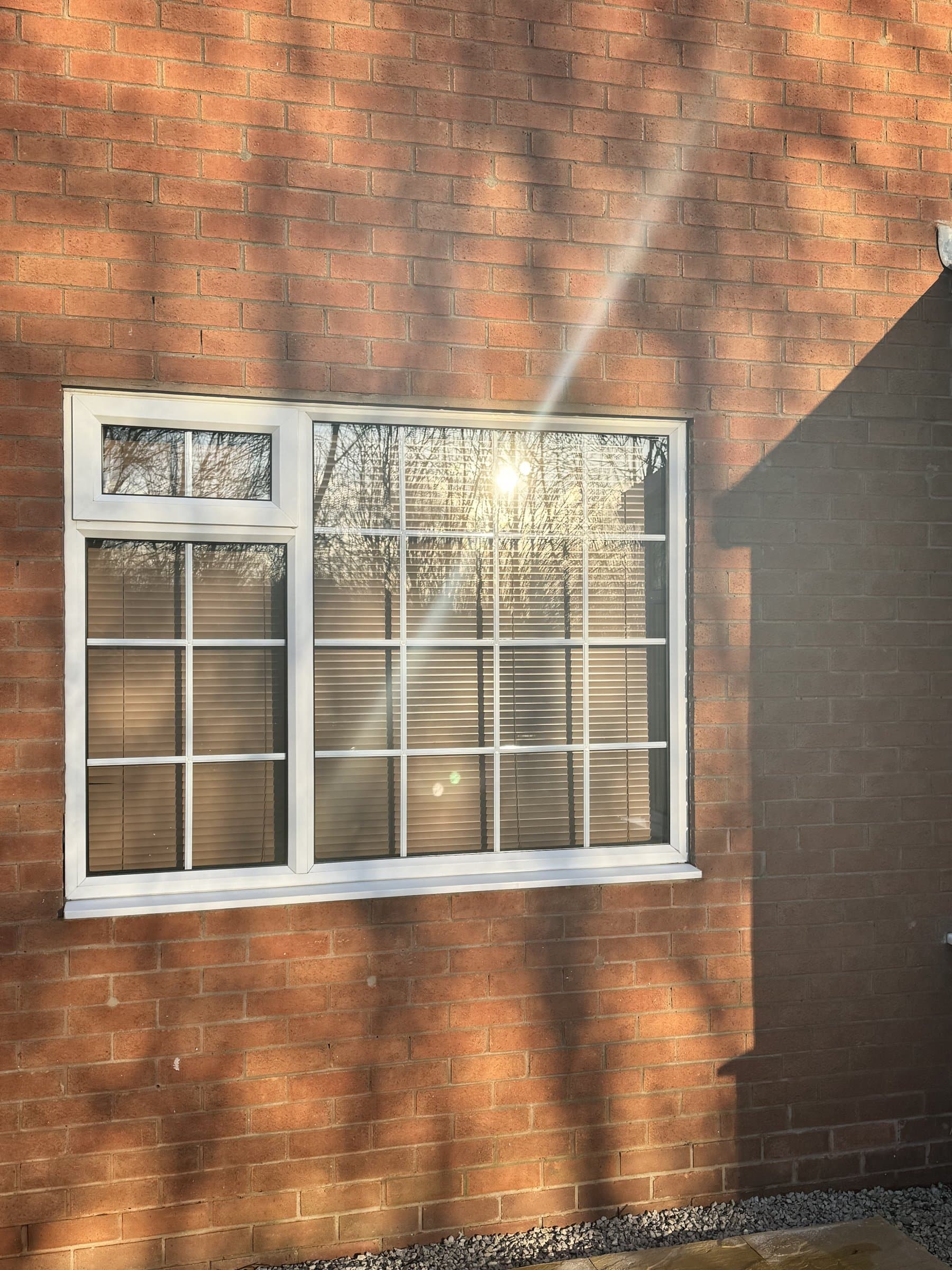
The first clean is the one that decides everything after it. Windows that haven't been professionally cleaned for a while aren't just dirty, they're carrying a build-up of grime, traffic film and old residue that a regular maintenance clean isn't designed to shift. Do the first one properly and every clean after it gets easier, faster, and better. Rush it, and you're fighting the same film forever.
How we do a first clean
Wet the window first
Never work on dry glass. Wetting first loosens the surface dirt so nothing gets dragged across the pane.
Let the solution dwell
The cleaning solution needs time on the glass to break down the built-up film. How long depends on the weather, the heat, and the concentration, on a hot day it dries fast, so we work smaller sections and watch it constantly. This step is judgement, not a timer.
Clean with pure water, glass, sills and frames
We go over everything with purified water on the fed pole: the glass, the sills, and the frames. Not just the panes, the dirt on the frames ends up on the glass with the next rain if you skip them.
Rinse each window thoroughly
Every trace of solution comes off before we move on. This is the step that matters most, see below for why.
Final pure-water pass over all the glass
Once the whole job is done, a last pass of pure water over every pane. Pure water has nothing dissolved in it, so it dries leaving nothing behind, no spots, no streaks, no residue.
Why the rinse is the whole job
Here's the bit most people never get told: any chemical left on the glass ruins future cleans. Residue attracts dirt, streaks in the rain, and builds a film that gets harder to shift each time. That's why we rinse each window fully and finish with pure water, when the water dries, there is literally nothing left on the pane.
It's also why we can offer the 48-hour rain guarantee with a straight face: If it rains within 48 hours of your window clean and you're not happy with the result, we'll come back and redo it. Free. No questions asked. Rain is pure water too, no minerals, no marks. If the glass was rinsed properly, rain has nothing to react with. If your windows streak after rain, it wasn't the rain, it was whatever got left on the glass.
Want to try it yourself?
For ground-floor glass you can get a decent result with household kit: a bucket of warm water with a small drop of washing-up liquid, a soft applicator or sponge, and a squeegee. Wet the glass, let it sit a minute, work top to bottom, and dry the frames after. The catch is the rinse, tap water is full of dissolved minerals (the same stuff that furs up your kettle), so whatever dries on the glass leaves spots. Work in the shade, finish each window before it dries, and buff off drips with a dry microfibre.
When to stop
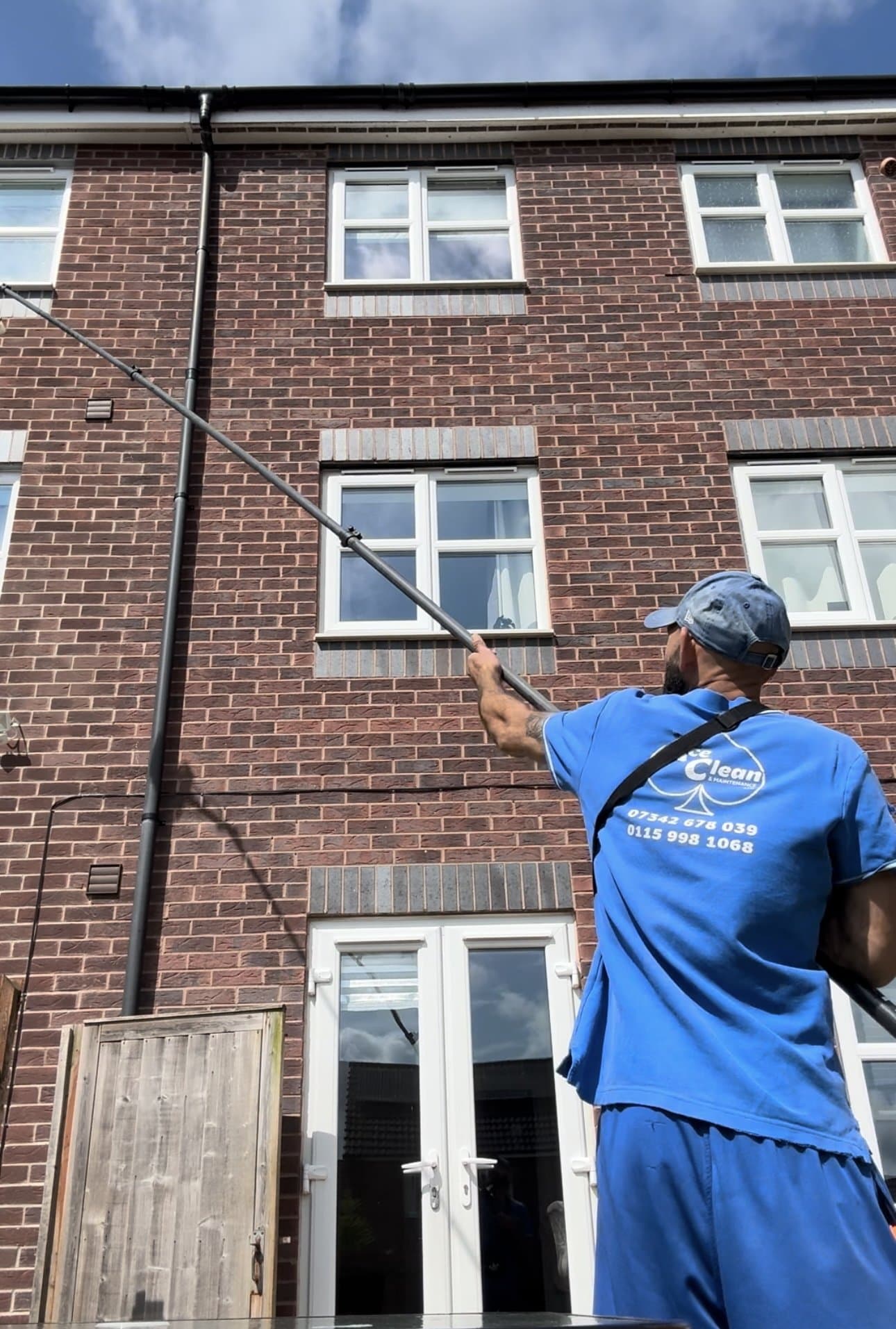
Anything above the ground floor isn't worth a ladder for the sake of clean glass. Our fed-pole system reaches third-storey windows safely from the ground, that's the honest line between a Saturday job and one to hand over.
Window prices are calculated live on our prices page , by property type, bedrooms and frequency, frames and sills always included.