Gutters are the cheapest bit of maintenance on your house, right up until they're the most expensive. A blocked gutter doesn't announce itself; it quietly tips rainwater down your walls, soaks the fascia and brickwork, and the first you know about it is a damp patch at ceiling level in a bedroom. By then the water's been getting in for months.
What a proper gutter clear actually includes
Look before anything else
A proper job starts with a walk-round from the ground, not a ladder: overflow staining or green tinges on the walls, sagging runs, plants growing along the gutter line. That tells you what you're dealing with before anything gets touched.
Clear the full channel, from the ground
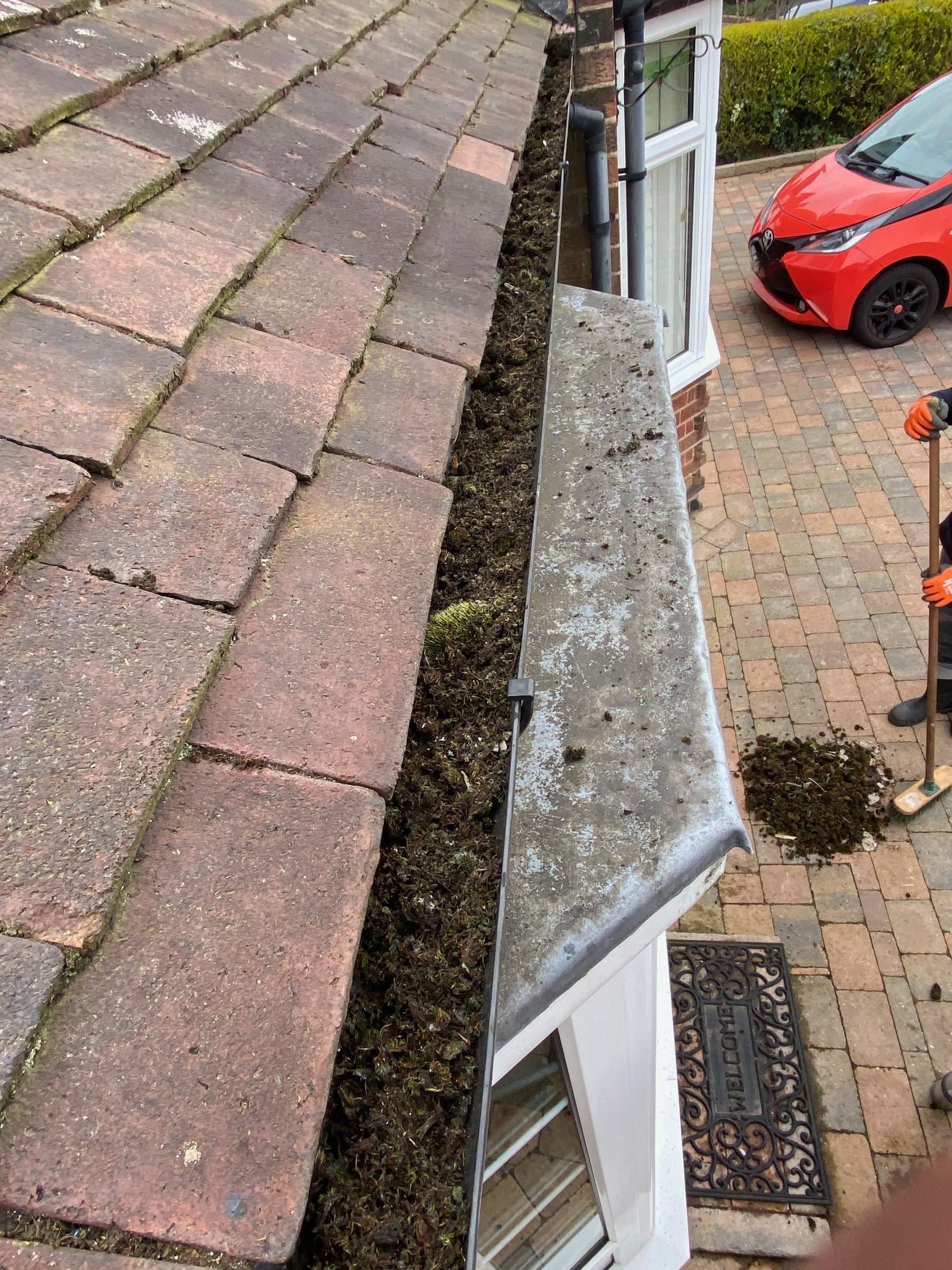
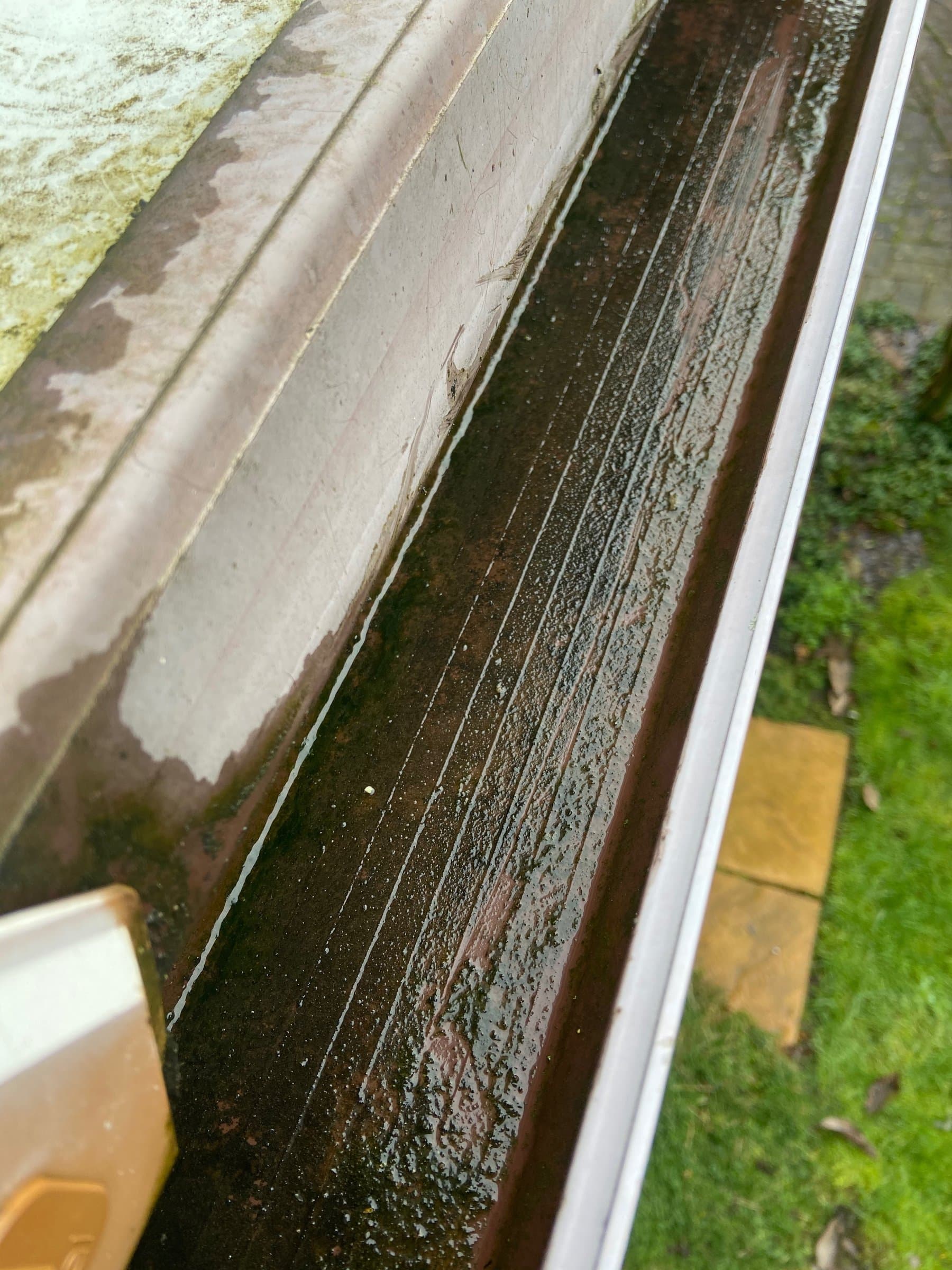
The whole run gets cleared, leaves, moss, compacted debris and sludge, not just the loose stuff on top. We use a SkyVac gutter vacuum on carbon-fibre poles, worked entirely from the ground, no ladders leaning on your gutters, which is a classic cause of cracked uPVC and bent brackets. If a spot genuinely needs a ladder we'll use one, but we only carry 2.4m ladders: if a job needs more than that, it needs different access, and we'll say so rather than stretch.
Downpipes and outlets, the bit that gets skipped
A clear gutter draining into a blocked downpipe still overflows. Every clear includes the outlets, and blocked downpipes get unblocked as part of the job, not as an extra. This is where corner-cutting jobs get found out.
Inspect as we go
Brackets, joints and fixings get a visual once-over. Cracked sections, sagging joints or loose brackets get flagged to you, a gutter clear can't fix a failed joint, and you'd want to know before winter, not after.
Leave it tidy
The debris gets bagged and left neatly with your household waste. No mess on the drive, no sludge in the borders.
Why the downpipe matters more than the gutter
Here's the thing most people never get told: the gutter is just a channel, the downpipe is the drain. The curved section at the top of a downpipe (the swan neck) is the tightest point in the whole system, and it's where debris jams. A cowboy trick worth knowing about: some outfits "clear" gutters by pushing the debris down the downpipe. It looks clear from below, and the blockage is now underground where it costs far more to fix. Ask whoever does your gutters what actually came out, and where it went. The honest answer is a sealed bag left with your household waste, not down the drain.
What you can safely check yourself, from the ground
Watch during heavy rain
Water sheeting or waterfalling over the gutter edge is the classic sign of a blockage, and you can see it from a window. While it's raining, check each downpipe is actually discharging at the drain below.
Look for the stains
Green staining or tide marks on the wall below the gutter line, peeling paint near the eaves, damp patches at ceiling level upstairs. All visible from the garden, no ladder needed.
Check for plant life
Grass or small plants growing along the gutter line means debris has sat long enough to root. Sagging or dipping runs mean it's waterlogged and heavy. Either way, it's overdue.
When to stop
At the ground. Anything above single-storey height is where the honest answer is to hand it over, ladder falls around UK homes put tens of thousands of people in A&E every year, and the professional kit does the job with both feet on the ground. And never, under any circumstances, lean a ladder on the gutter itself or climb onto a conservatory roof to reach a gutter, glass and polycarbonate panels are not built to take a person's weight.
How often, and what it costs
Twice a year is the standard for most UK homes, late autumn after the leaves have fallen, and again in spring. Homes under trees or with mossy roofs need it more often, because the moss sheds into the gutters year-round. Skip it entirely and the maths turns ugly: a routine clear costs a fraction of what damp remediation and redecorating cost once water has been coming through a bedroom ceiling.
Typical UK prices run roughly £50–£200 depending on the size of the house and the access. Our own pricing is simpler than that: £35 per side for the inside of the gutters, downpipes unblocked and flushed included, with the side count confirmed before we start. One quick note on gutter guards while we're here: UK gutters mostly block with moss, grit and silt, exactly the stuff guards can't stop, so a regular clear usually beats them on cost and works better.
If you've spotted any of the signs above, send us a photo on WhatsApp and we'll tell you straight whether it needs doing, or book a free quote and we'll confirm the price before anything starts.