The white boards around your roofline are the most visible part of your house from the street, and the first to go green. The green is algae, the black is mould and grime, and both need one thing to thrive: persistent damp. Which is why they favour north-facing rooflines, shaded sides with no airflow, and, above all, boards that a blocked or leaking gutter keeps permanently wet.
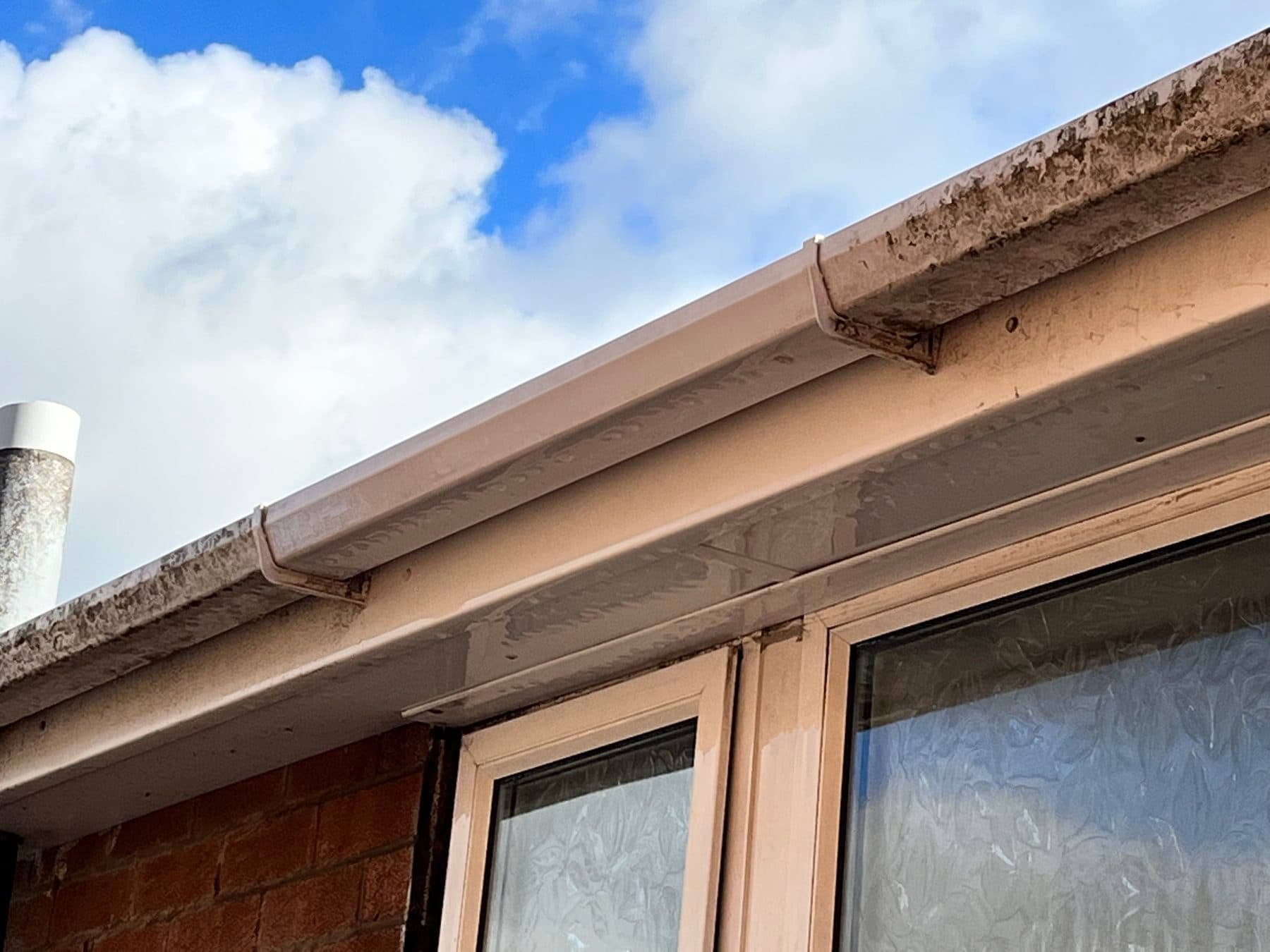 Before
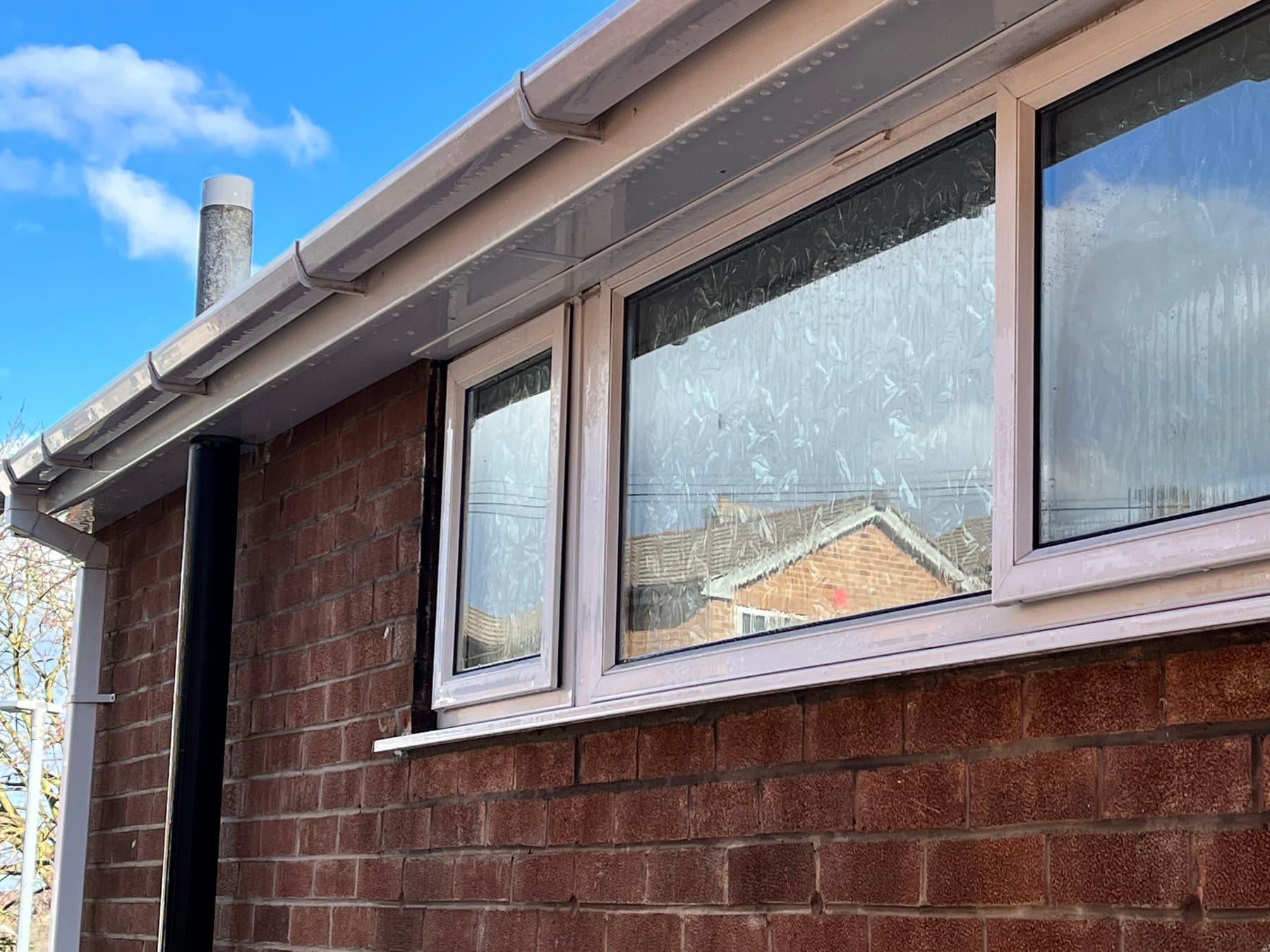 After
AfterHow the roofline gets cleaned properly
Read the staining first
Green and black streaks usually track a blocked or leaking gutter joint, the staining is a map of where the water goes. We also check for damage before cleaning: warped boards, gaps, cracked vents. Cleaning can't fix damage, and you deserve to know which conversation you're having.
Deal with the gutter, not just the boards
Clean the fascias while the gutter above them is still blocked and the first rain re-stains everything, the gutter is the cause, the staining is the symptom. If your gutter's the culprit, we'll tell you straight rather than take money for cleaning boards that'll be green again by autumn.
Work from the ground
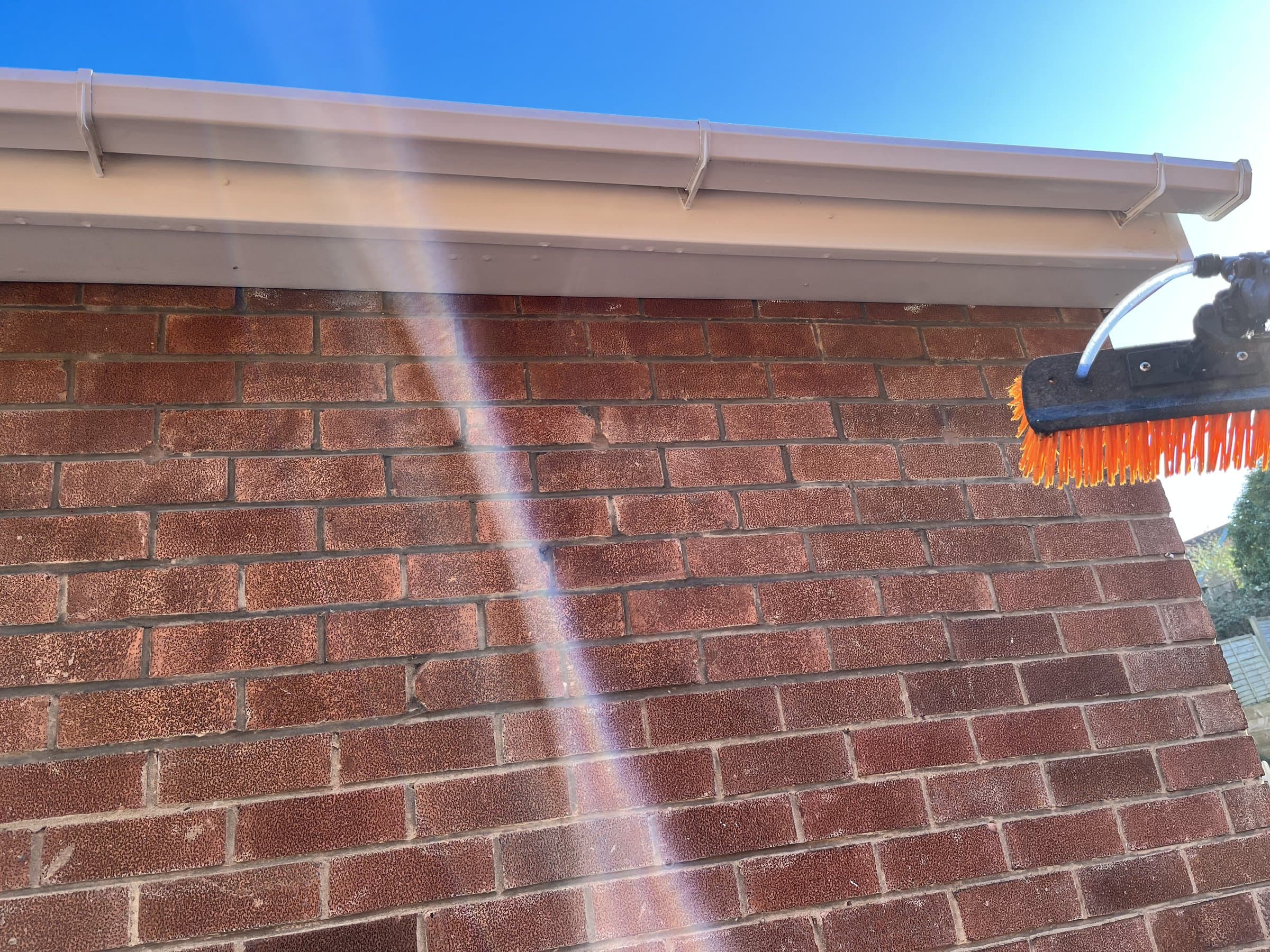
Rooflines get cleaned with poles and soft brushes from the ground wherever possible, the safest way to work at height is not to be at height. Genuinely awkward access is what proper equipment is for, and it's what adds to a quote, not padding.
Low-pressure softwash, never a blast
We apply a biodegradable solution at low pressure that breaks down the algae and mould, then rinse gently. High-pressure washing on a roofline is a mistake: it forces water behind the boards and up under the roof tiles, and can crack thin soffit panels. The soffit vents get cleared too, blocked vents mean condensation in the roof space.
Rinse top-down and pick the day
The rinse works top to bottom so dirty water never runs over cleaned boards. Overcast days give the best finish, hot sun dries the solution onto warm boards and leaves streaks.
Why it's not spray-and-rinse
The same solution can clean a board perfectly or mark it, depending on three things an operator judges on the day: how long it's left to dwell, the temperature it's working at, and how strongly it's diluted, the trade calls it Sinner's Circle, and ease one off and another has to make up for it. Because sun and wind dry a solution faster than you'd expect, the dwell time on uPVC is read on the day, not taken off a label: left too long or mixed too strong, it can dull the plastic it's meant to be cleaning.
Why the boards keep going green again
One clean does not fix a green fascia for good, because algae is a symptom, not the disease. The disease is damp: shade, poor airflow, and usually a gutter overflowing or dripping onto the boards. Clean the boards without fixing the cause and the UK climate brings the green back within months. If one stretch of your roofline always greens up faster than the rest, suspect the gutter directly above it, that's why our Full Roofline Refresh does the inside of the gutters and the outside faces in the same visit.
What you can safely do yourself
Check after heavy rain, from the ground
Water dripping from gutter joints and green streaks tracking down the fascia are the earliest warning signs, all visible without a ladder.
Wash what you can reach with both feet on the ground
Porch fascias, bungalow rooflines, ground-floor bay tops: warm water and washing-up liquid on a soft cloth or sponge, working top-down, rinsed with clean water. Test any shop-bought uPVC cleaner on a hidden patch first.
Never scrub with anything abrasive
Scouring pads, wire brushes and abrasive cream cleaners leave micro-scratches that permanently dull the finish, and the scratches become dirt traps that make the boards green up faster next time.
Skip the bleach
Household bleach can yellow uPVC, the runoff scorches whatever's planted below, and bleach must never be mixed with other cleaners. Soapy water or a dedicated uPVC cleaner is the honest DIY ceiling.
When to stop
Any roofline above single-storey height, that's the line. Overreaching from a ladder is one of the most common cleaning accidents in the country, and a ladder should never rest on the guttering. And never climb onto a conservatory, porch or flat roof to reach the boards above it. Everything past that line is exactly what ground-based poles and proper access equipment are for.
What it costs
Typical UK prices for a soffit and fascia clean run from about £50 for a small terrace to £250+ for a large detached with awkward access. Ours is simpler: £60 per side for the Roofline Clean, soffits, fascias and the outside of the gutters in one pass, with a free window clean included because cleaning the roofline pushes dirt onto the glass below. For scale: replacing a neglected roofline typically runs £1,500–£4,000. Cleaning is the cheap option, and it stays the cheap option as long as you don't leave it too long.
Not sure if yours needs cleaning or repairing? Send a photo on WhatsApp and we'll tell you straight, including if it's a job you don't need yet.